CTTE College Organises Mentoring Session on Lean Startup and MVP
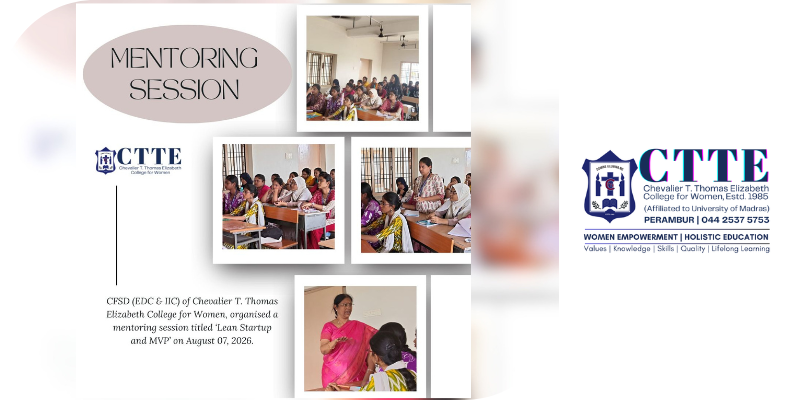
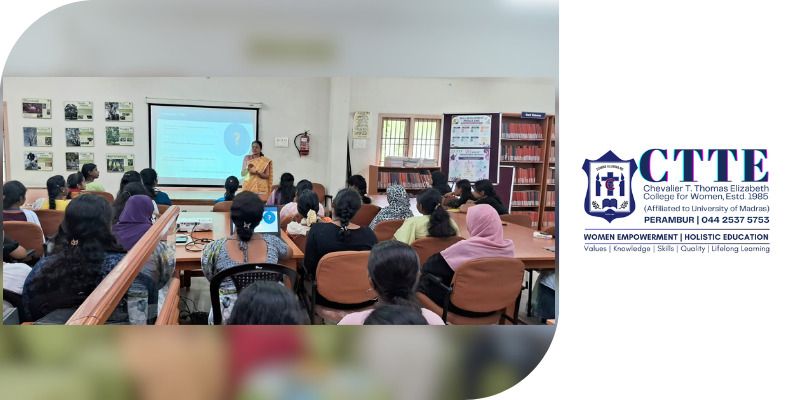
CFSD (EDC & IIC) of Chevalier T. Thomas Elizabeth College for Women, organised a mentoring session titled ‘Lean Startup and MVP’. The session was led by Dr P. Malarvizhi, Assistant Professor of Commerce, Innovation Ambassador, and Ex Officio Member of the College IIC.
The session commenced with an overview of fundamental start-up concepts and the contemporary entrepreneurial landscape in India. The resource person introduced participants to the principles of lean start-up methodology and emphasised the importance of developing business ideas through systematic validation and iterative improvement.
Drawing on case studies of Uber, Amazon, and Airbnb, Dr Malarvizhi explained how emerging ventures can identify customer needs, test assumptions, and develop a Minimum Viable Product (MVP) with essential features before undertaking large-scale development. The MVP Moscow Matrix was used to help participants distinguish between essential, desirable, optional, and non-essential features while conceptualising a product or business model.
The session provided participants with a structured understanding of lean start-up principles and the role of MVP development in validating business ideas, reducing risk, and responding effectively to market requirements.
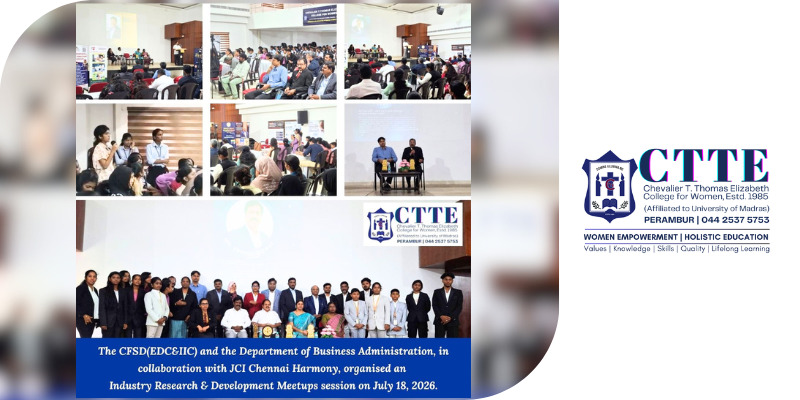
The CFSD(EDC&IIC) and the Department of Business Administration, in collaboration with JCI Chennai Harmony, organised an Industry Research & Development Meetups session on July 18, 2026 as part of the IIC Calendar Activity – Innovation & Entrepreneurship.
The programme, centred on entrepreneurship, aimed to strengthen industry–academia engagement and provide students with practical insights into innovation, sustainable business practices, corporate social responsibility (CSR), and emerging start-up opportunities.
The programme featured Dr. Ganesh Acharya, Chairman, Shield International Group, SHE International Foundation and AMG Group; Dr. Meena Krishnan, Director – Innovation & Entrepreneurship, StartupTN, Government of Tamil Nadu; and Mr. S. Prakash Kumar, Vice-President – Corporate Social Responsibility, TVS Motor Company Ltd. The experts shared insights into sustainable governance, CSR, the Sustainable Development Goals (SDGs), the green economy, innovation and entrepreneurship, while emphasising the importance of creative thinking, leadership and problem-solving.
An exhibition featuring TecNZone Technologies, HR SPOC Technologies, Hamsa Kids Child Development Centre, Luna Home Healthcare Services, SVS Tax Solutions, Infra Tech Builders, Trinity Group of Institutions, Dream Catchers and VIBEO provided students with an opportunity to interact with industry representatives and explore products and services across sectors such as digital solutions, healthcare, taxation, construction, education and business consultancy.
The programme brought together 59 students, five teaching and non-teaching staff members and 24 external participants. Interactive discussions and networking sessions enabled students to gain insights into start-ups, career opportunities, industry expectations and contemporary business practices.
The initiative enhanced students’ understanding of innovation, entrepreneurship and contemporary industry practices, while fostering entrepreneurial thinking and strengthening meaningful industry–academia engagement.
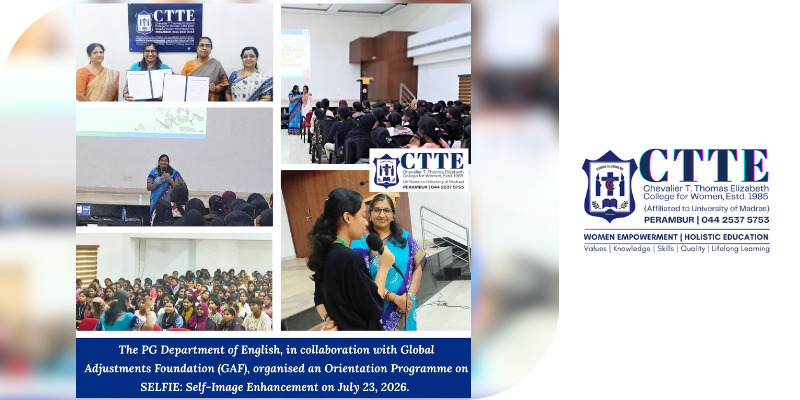
Chevalier T. Thomas Elizabeth College for Women entered into a Memorandum of Understanding (MoU) with Global Adjustments Foundation (GAF) on 23 July 2026, marking the beginning of an academic collaboration dedicated to fostering student empowerment and holistic development. The MoU was formalised in the presence of the Principal, the Head of the PG Department of English, and the representative of Global Adjustments Foundation. The partnership seeks to promote initiatives that enhance students’ personal growth, leadership competencies, life skills, emotional well-being, and overall personality development through a series of collaborative programmes.
As the inaugural initiative under the MoU, the PG Department of English, in collaboration with Global Adjustments Foundation, organised an Orientation Programme titled SELFIE: Self-Image Enhancement for first-year undergraduate students. The programme was designed to familiarise students with the significance of developing a positive self-image during the transition to higher education and to equip them with the personal competencies required for academic success and lifelong learning.
The session was facilitated by Mrs Shreedevi Ramesh, Consultant Trainer, ChampionWoman, Global Adjustments Foundation. Drawing upon her extensive corporate, leadership, and training experience, she delivered an engaging and insightful session on the importance of self-awareness, self-confidence, emotional resilience, and personal effectiveness. She emphasised that a healthy self-image forms the foundation for academic achievement, effective communication, leadership, and responsible decision-making.
Through interactive discussions, reflective activities, and practical examples, the resource person encouraged students to identify their individual strengths, overcome self-limiting beliefs, and cultivate a growth mindset. The programme also highlighted the importance of positive attitudes, emotional intelligence, adaptability, and resilience in responding to academic and personal challenges.
Teaching Remains Future-Ready in the Age of AI, Students Told
Chennai, June 18
Chevalier T. Thomas Elizabeth College for Women organized an insightful and interactive lecture on “The Future of Teaching as a Career in the Age of Artificial Intelligence” for undergraduate students, highlighting the continuing relevance and growing opportunities in the teaching profession despite rapid technological advancements.
The session was delivered by Mrs. Sukanya Sivasubramanian, Vice-Principal (Administration), G.B. Public School, Melmaruvathur, who discussed the transformative impact of artificial intelligence on education and the evolving role of teachers in modern classrooms.
Addressing the students, the speaker explained how AI-powered tools are increasingly being used in lesson planning, assessments, grading, and data analysis through technologies such as OMR-based evaluation systems. However, she emphasized that teachers remain irreplaceable in mentoring, motivating, and shaping the character and values of students.
The lecture explored emerging trends in global education, competitive examinations, communication skills, and the growing importance of language proficiency across professions. Students were encouraged to make informed career decisions based on factual understanding rather than misconceptions surrounding the teaching profession.
Drawing a comparison between AI and teachers, Mrs. Sukanya noted that while artificial intelligence can efficiently perform routine and repetitive tasks, teachers excel in classroom management, emotional support, ethical guidance, critical thinking development, and inspiring lifelong learning. She stressed that AI should be viewed as a supportive educational tool rather than a substitute for teachers.
Dispelling the myth that teaching is a low-paying profession, the speaker highlighted the competitive salaries, job security, health benefits, paid holidays, professional recognition, and career advancement opportunities available to qualified educators in reputed institutions. She described teaching as a stable and socially respected profession with strong long-term growth prospects.
The session also focused on the increasing demand for teachers nationally and globally. Referring to projections that India will require nearly 1.2 million additional teachers in the coming years, she pointed out that opportunities are particularly abundant in English, Mathematics, Science, and Computer Science education.
Students were introduced to the essential competencies required of future educators, including strong subject knowledge, communication skills, classroom leadership, digital literacy, blended learning management, and the responsible use of AI-enabled educational technologies. The speaker emphasized the need for continuous learning, adaptability, and innovation in teaching practices.
Encouraging students to identify their career goals early and work consistently towards achieving them, Mrs. Sukanya underscored the importance of passion, commitment, and lifelong learning in professional success.
The interactive programme concluded with a reflection on the enduring impact of teachers in society and their vital role in nation-building. The session provided valuable insights into emerging educational trends and inspired students to view teaching not merely as a career option but as a profession of influence, leadership, innovation, and lasting societal contribution.
Special Talk on Human Creativity in the Age of Artificial Intelligence
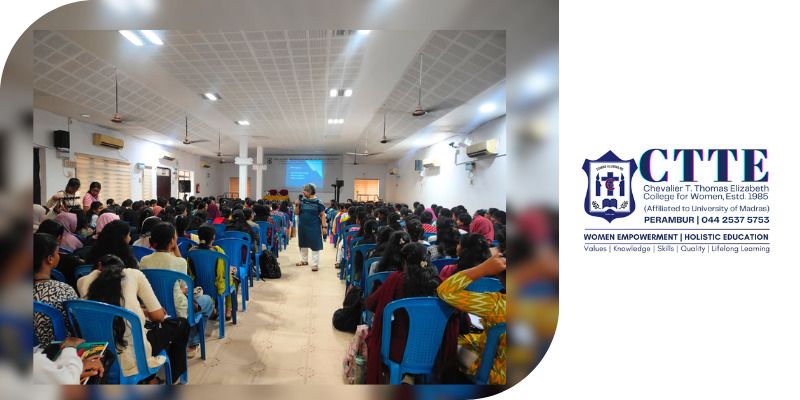
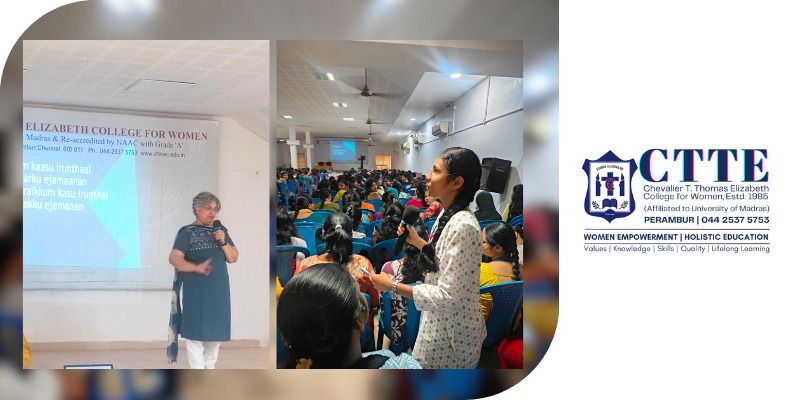
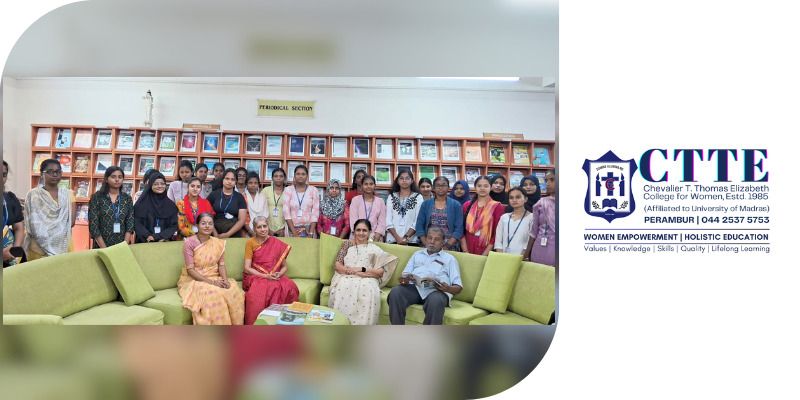
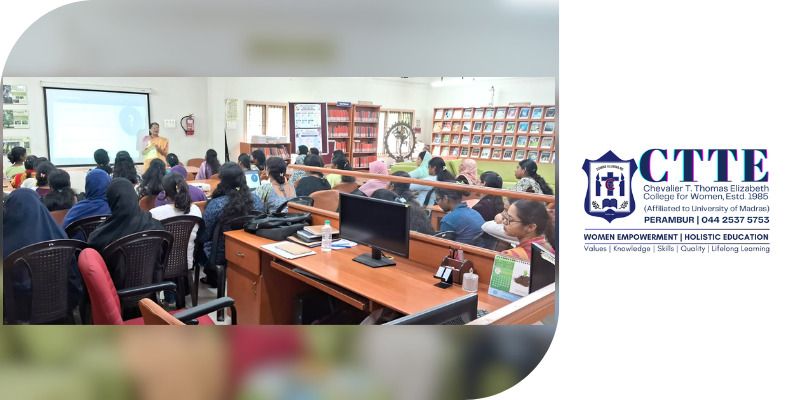
Chennai, June 18: The Department of Computer Science of Chevalier T. Thomas Elizabeth College for Women organised a special talk on “The Creativity Advantage: Why Human Imagination Matters in the Age of AI” on the college premises recently.
The session was conducted by Ms Vidya Shankar, poet, author, editor, writing mentor and life coach. Addressing the students, she highlighted the distinctive qualities of human imagination and creativity that cannot be replicated by artificial intelligence.
Through a series of interactive activities, students were encouraged to visualise imaginary situations, mentally revisit their favourite songs, recall familiar scents and memories, and reflect on personal experiences. The exercises demonstrated how imagination is shaped by emotions, memories, sensory perceptions and lived experiences.
Ms Shankar emphasised that while AI is capable of processing information and generating content, it lacks the ability to experience emotions, form personal memories or derive meaning from life in the way humans do. She urged students to nurture their creativity, curiosity, empathy and independent thinking as essential strengths in an increasingly technology-driven world.
Referring to the message conveyed in the popular song “Oruvan Oruvan Mudhalali”, she reminded participants that technology should remain a tool in human hands and not dictate individual choices, thinking or identity.
The programme witnessed enthusiastic participation from students, who actively engaged in discussions on imagination, self-awareness and the responsible use of artificial intelligence. The session provided valuable insights into the enduring relevance of human creativity in the age of AI.